A decade ago, the pinnacle of food culture was a reservation, somewhere with a three-month waitlist, a tasting menu that ran fourteen courses, and a bill that required psychological preparation. The food was exquisite. The experience was reverent. And for a growing number of consumers, it was exactly the kind of evening they no longer want.
The shift isn’t subtle. Fine dining still exists, but its cultural dominance is eroding — replaced not by another form of restaurant, but by something that doesn’t require a reservation at all. Night markets, food trucks, pop-up vendors, and global street food stalls have become the places where the most interesting food conversations are happening. The global street food market was valued at $249.5 billion in 2024 and is expanding at a compound annual growth rate of 8.5%. That’s not a niche. That’s a movement.
What Changed
The factors driving street food’s rise are both economic and cultural, and they’ve been building for years. But several forces reached a tipping point simultaneously.
- Cost-of-living pressure reshaped dining priorities. A McKinsey ConsumerWise survey from August 2025 found that among consumers who said dining out “wasn’t worth the money,” the top complaint was food quality relative to price — particularly among Gen Z, 73% of whom ranked food quality in their top three disappointments after a recent restaurant visit. When a $250 tasting menu fails to impress, a $12 plate of birria tacos that exceeds expectations reframes the entire value equation.
- Social media inverted the prestige hierarchy. TikTok doesn’t reward white tablecloths — it rewards novelty, authenticity, and visual impact. A steaming bowl of laksa served from a truck generates more engagement than a deconstructed amuse-bouche on a slate plate. The “TikTok Made Me Try It” effect has become a measurable driver of foot traffic for street food vendors and food trucks.
- Generational taste shifted toward global flavours. Younger diners don’t want one chef’s vision — they want variety, cultural specificity, and the freedom to eat three different cuisines in one evening. Night markets and food truck parks offer exactly that, while fine dining’s fixed-menu format feels restrictive by comparison.
- Informality became a value, not a compromise. The pandemic accelerated a cultural shift away from formality that was already underway. Eating excellent food while standing at a counter or sitting on a park bench isn’t seen as settling — it’s experienced as freedom from the performance of dining out.
The Experience Economy at Street Level
The conversation about food experiences used to centre on ambiance, service, and presentation — the theatre of fine dining. Street food has created its own theatre, and for many consumers, it’s more compelling.
Night markets are a perfect example. Vancouver’s Richmond Night Market, Toronto’s Smorgasburg pop-ups, and Montreal’s street food festivals draw tens of thousands precisely because they offer what a single restaurant can’t: dozens of cuisines under one roof, the energy of a crowd, live music or performance, and the freedom to graze rather than commit to a single menu. The experience isn’t just about the food — it’s about the environment, the discovery, and the social dimension of eating alongside strangers.
This parallels a broader consumer trend toward experiential spending over product spending. People increasingly allocate discretionary income to moments rather than things — whether that’s a weekend at a food festival, a spontaneous evening at Spin City casino trying the latest live dealer tables online, or a flight to a city specifically to eat at its street vendors. The common thread is that the experience itself is the product, and the best experiences in 2026 tend to be informal, social, and discovery-driven.
Where Fine Dining Still Wins — and Where It Doesn’t
It would be inaccurate to declare fine dining dead. At the top end, the industry is evolving rather than declining — but the evolution involves absorbing lessons from street food rather than ignoring them.
| Dimension | Fine dining advantage | Street food advantage |
| Ingredient quality | Access to premium, rare ingredients with precise sourcing | Fresh, locally sourced ingredients prepared on-site |
| Technique | Complex, time-intensive preparations that require years of training | Simplified techniques perfected through repetition and passed through generations |
| Atmosphere | Controlled, intimate, designed environment | Spontaneous, social, high-energy environment |
| Value perception | Justifiable for special occasions and celebrations | Consistent everyday value that doesn’t require justification |
| Cultural range | Typically, one chef’s interpretation of one cuisine | Multiple cuisines, vendors, and traditions in one location |
| Accessibility | Requires a reservation, dress code, and a significant budget | Walk up, order, eat — no barriers to entry |
| Social media appeal | Polished but predictable | Raw, authentic, and shareable |
Several fine dining chefs have responded by launching more accessible concepts. The 2026 hospitality trend report from Malou noted that even high-end chefs are exploring affordable formats, with menu price points around $20–22 designed to attract a broader audience.
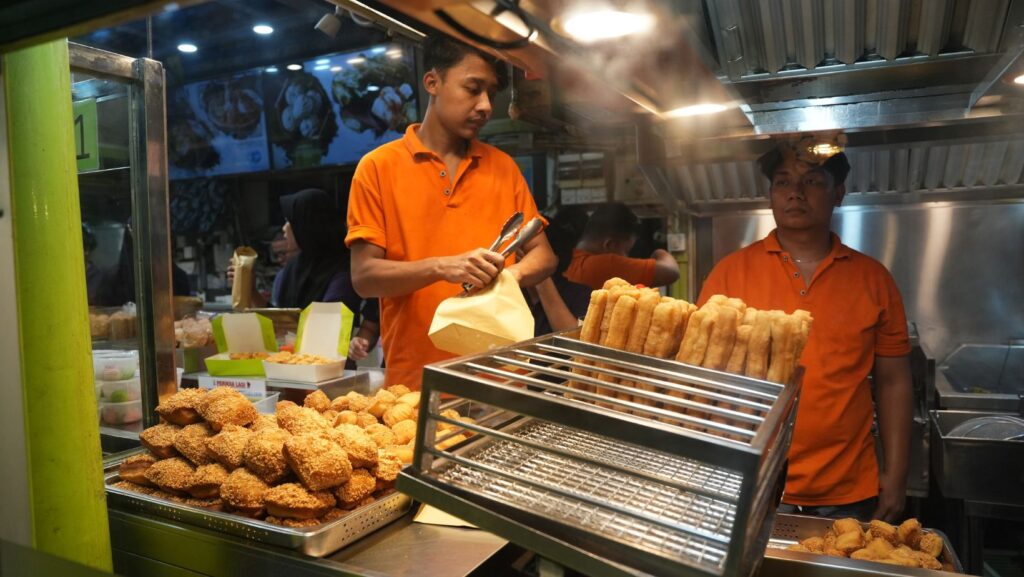
In Canada, this shows up in the form of chef-driven food truck concepts, pop-up dinners in unconventional spaces, and fine dining restaurants adding casual takeout windows — all acknowledging that the market has shifted toward approachability.
What’s Driving the Canadian Street Food Scene
Canada’s street food landscape has its own texture, shaped by the country’s multicultural composition and urban density. Toronto alone has over 200 licensed food trucks, and the city’s food hall and night market scene has expanded dramatically since 2022. Vancouver’s food truck culture, fuelled by Asian-Canadian fusion, has become a destination category in its own right. Montreal’s food scene, traditionally dominated by its restaurant culture, has increasingly embraced outdoor markets and pop-up formats.
The immigration-driven diversity of Canadian cities gives the street food scene an advantage that most countries can’t replicate at the same scale. A single food court in Scarborough might offer Sri Lankan hoppers, Somali sambusas, Filipino sisig, and Trinidadian doubles — an international education condensed into a lunch break. That kind of variety, at that price point, is something no fine dining establishment can match.
The Plate Is the Experience
The fine dining model was built on the idea that food should be an event — something you plan for, dress for, and savour in a controlled setting. Street food has redefined the event itself. The event is now discovery: stumbling onto a vendor you’ve never tried, tasting something you can’t pronounce, sharing a table with someone you don’t know. The food is still the centrepiece, but the frame around it has changed entirely. For a generation that values spontaneity over ceremony and authenticity over polish, that shift isn’t temporary. It’s structural.