Sprint demos are recorded live and then never referenced again, because finding the relevant ninety seconds is harder than asking the author directly. The format has been adopted enthusiastically; the production practice around it hasn’t matured at all. That gap is where most of the wasted engineering time now sits.
Async Video Solved One Problem and Created Another
The case for recorded updates was sound. Time zones make synchronous review expensive, and a written RFC loses anything that depends on demonstration.
What went wrong is that teams treated recording as free and therefore skipped preparation entirely. An unstructured fifty-minute capture transfers the cost from the author to every viewer, multiplied by team size. A twelve-person team watching a badly organised recording burns more collective hours than a scheduled meeting would have.
The second failure is durability. Live recordings are unrepairable. When a design changes between review and implementation, the recording is simply wrong, and nobody has time to redo it, so it stays in the wiki misleading whoever finds it six months later.
Structure Is the Variable That Matters
The teams doing this well share one habit: they separate the demonstration from the explanation and produce them differently.
Demonstration is capture. Show the system doing the thing, unedited, with real data. Explanation is composition — the architecture context, the trade-off comparison, the reason this approach was chosen over two alternatives. Composed segments benefit enormously from being planned, and they’re the segments that make a recording navigable.
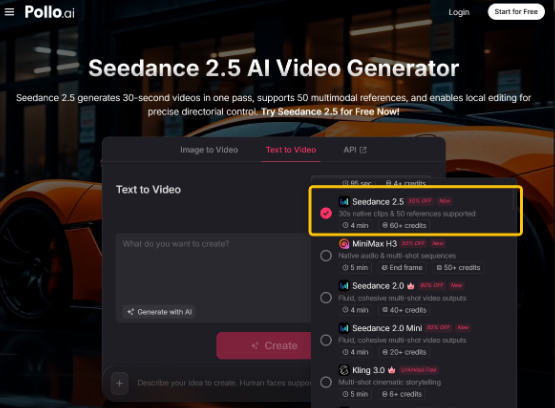
This is where controllable generation has become practical for internal engineering work. Pollo AI’s Seedance 2.5 handles the composed layer with a property engineering teams care about more than aesthetics: element-level editing without regenerating the whole piece, so when a design decision changes, the affected portion of an existing presentation can be corrected rather than abandoned. It generates thirty seconds continuously in a single native pass with no segment stitching, holds physical and visual behaviour stable across that duration, and reports roughly a twenty percent gain in how faithfully written direction is executed — useful when the instruction is a precise description of a system diagram in motion. It’s currently offered at half price, which lowers the barrier for teams trialling it against a quarter of design reviews.
Prompt Fidelity Matters More Here Than Anywhere Else
In creative work, loose interpretation is often welcome. In engineering communication it’s a defect, because the entire purpose is to eliminate ambiguity about how a system behaves.
The practical test before adopting any tool for an automated tech presentation video workflow is straightforward. Write a description with four explicit constraints — what moves, in which direction, in what order, with what emphasis — and count how many survive. Anything that reliably drops half your constraints will generate more review cycles than it removes.
This is also why the composed layer should never depict real system behaviour. Generated visuals belong in the conceptual register: abstractions, analogies, structural relationships. The moment they purport to show measured output, they become a correctness hazard, and engineering audiences are unforgiving about that distinction for good reason.
Where Presenter Platforms Cover the Organisational Layer
Alongside technical review material, engineering organisations produce a steady volume of scripted internal content: security training, incident response procedure refreshers, tooling rollouts, compliance briefings, the same platform migration explanation for teams across several regions.
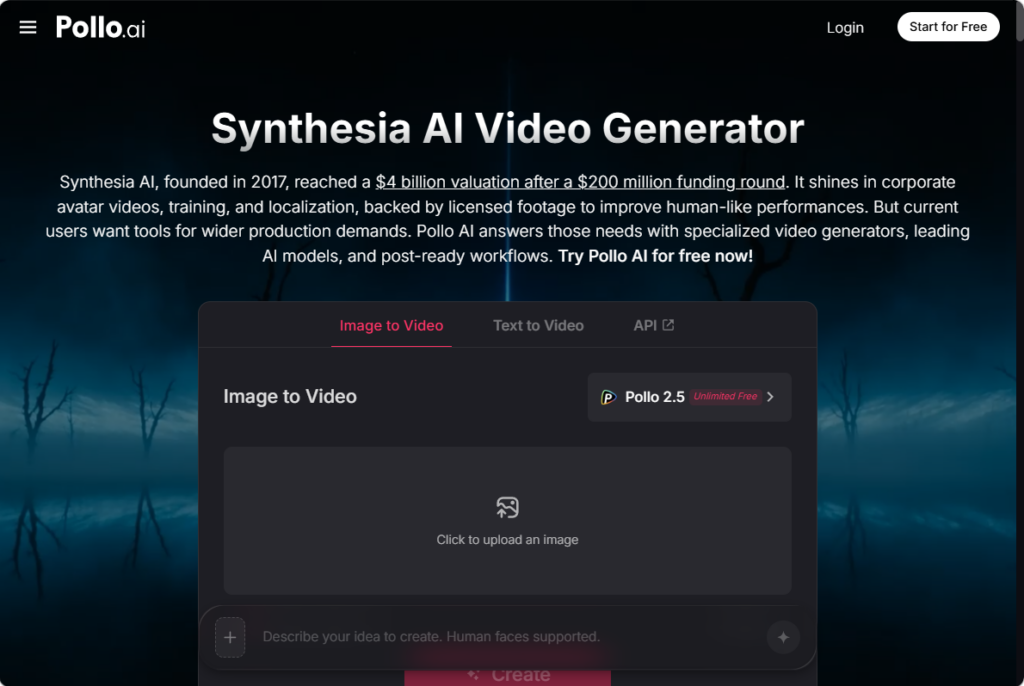
Synthesia AI Video Generator addresses that workload and pairs with Pollo AI rather than competing for the same job. Its strength is scripted presenter output at scale — a catalogue of over a hundred and sixty avatars with believable movement and emotional range, delivery in more than a hundred and forty languages, and an assistant that converts a policy document or an internal page into a structured script with scenes and supplementary shots already generated. Centralised brand configuration keeps every output aligned, and licensed stock media avoids rights questions for material distributed across an enterprise.
For onboarding two hundred new engineers onto a deployment process in six languages, that’s the correct machinery. It contributes nothing to explaining a consensus algorithm, which is why the two belong in separate parts of the pipeline.
Restructuring How Your Team Records Technical Presentations
Split the Recording Into Navigable Units
Stop producing single long captures. Break every review into discrete segments of two to four minutes, each answering one question — the problem, the proposed approach, the rejected alternatives, the migration path, the open risks. Name them explicitly. This alone recovers most of the wasted viewing time, because reviewers can jump to the section relevant to their component instead of scrubbing blindly through a monolithic recording.
Standardise Visual Grammar for System Concepts
Agree on how your team depicts recurring abstractions — services, queues, data stores, request paths — and reuse that grammar everywhere. Feeding those established diagram styles and colour conventions in as reference inputs means generated conceptual segments match your existing architecture documentation rather than introducing a competing visual language. Consistency here has a measurable effect on comprehension speed, particularly for engineers reviewing systems outside their own area.
Compose the Explanatory Beats, Capture Everything Else
Record real behaviour live and produce the conceptual sections separately. Using Pollo AI’s Seedance 2.5, a full continuous pass carries a single explanatory idea end to end without the internal joins that make composited footage read as disjointed, and native 4K output stays legible when the segment sits alongside a high-resolution IDE capture on a large display. Keep the two registers visually distinct so viewers always know whether they’re seeing a real system or a model of one.
Maintain Presentations Like Documentation
Attach every recorded review to the design document it accompanies and note the commit or decision it reflects. When the design evolves, revise the affected segment rather than deprecating the whole recording. Route the purely procedural material — process changes, tooling announcements, anything requiring translation — through Synthesia AI Video Generator, where an update means editing a script rather than reproducing a visual.
The Underrated Return on Better Internal Video
Teams measure engineering productivity obsessively and almost never measure the cost of internal communication, which is strange given how much of a senior engineer’s week it consumes.
A well-structured architecture explanation watched by thirty engineers and referenced for two years is one of the highest-leverage artefacts an organisation can produce. A badly structured one costs thirty people forty minutes and gets deleted.
Whether a team relies on Synthesia AI Video Generator for its compliance and onboarding library or on generated conceptual segments for design reviews, the differentiator is unchanged: knowing what to explain, in what order, and what to leave out. Tooling has removed the excuse that preparing it properly takes too long.